EXCLUSIVE: Canada had every reason to deport him. Then a minister intervened
Who gets access and who doesn’t in Canada’s immigration system?

((disclaimer: pseudonyms have been used to protect the identities of subjects in this story due to privacy concerns and fear of reprisals))
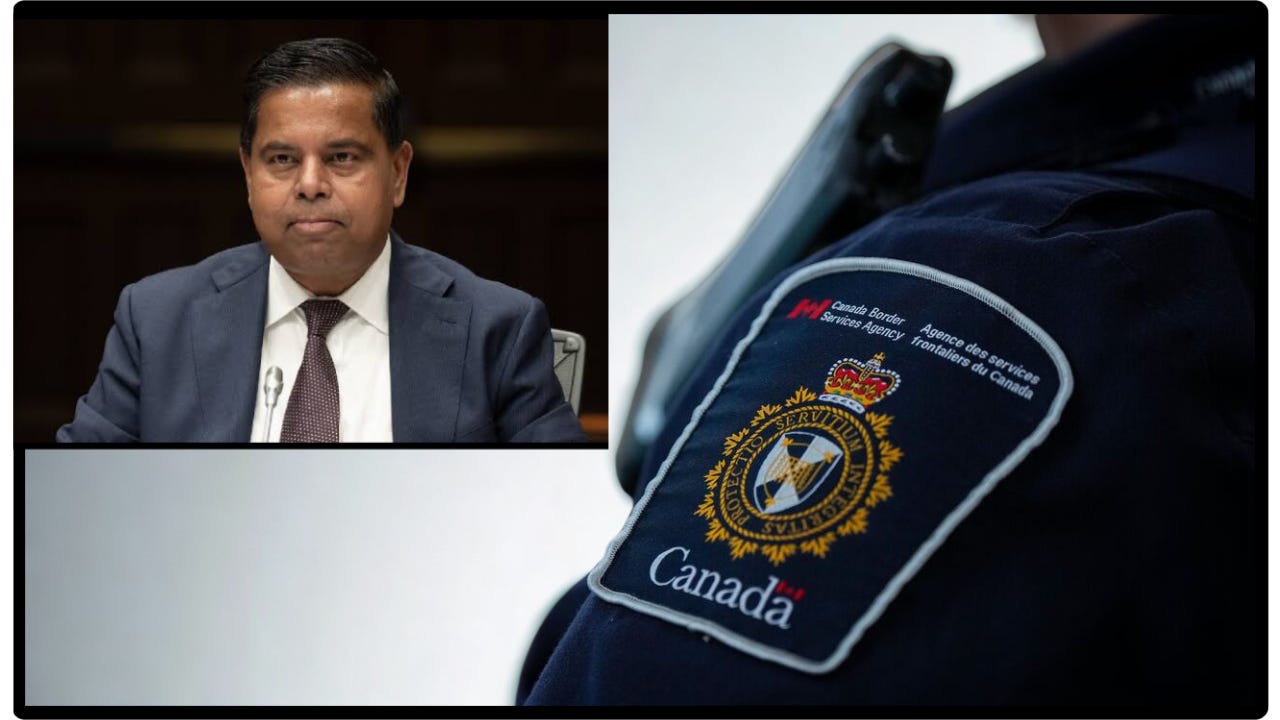
Less than 24 hours before a Ukrainian national was set to be deported from Canada, a last-minute reprieve from Minister of Public Safety Gary Anandasangaree kiboshed months of logistics, paperwork and international co-operation – and he won’t say why.
The case shines a light on the disparities within Canada’s immigration system when it comes to who gets access to high-level intervention, and who does not.
When the Liberal government announced its increase in spending for the Canadian Border Services Agency (CBSA) in 2025, Anandasangaree touted $617.7 million over five years to “train, hire and deploy 1,000 CBSA officers” as part of the government’s promise to crack down on cross-border traffic in drugs, illegal guns and stolen cars.
Since then, the CBSA has ramped up deportations in an effort to sustain their goal of 20,000 expulsions per year over the next two years.
The federal agency told The Walrus in March that the CBSA had deported 22,500 people in 2025 (the highest annual total in its history) and was “currently removing approximately 400 individuals from Canada each week” with an emphasis on cases with criminal history or national security concerns.
Particular scrutiny has landed on the proceedings happening in Quebec, with the CBC and The Breach recently covering what advocates call “harsh, unprecedented tactics” used by the CBSA in their deportation drive, resulting in some “painful” family separations playing out.
The question of who gets to stay in the country and who is forced to leave is a highly fraught political and social subject, and in some cases appears to be applied indiscriminately – which brings us to Mr. X.
‘A SERIOUS CRIMINAL OFFENCE’
Mr. X arrived in Canada in 2022 under the ‘Canada-Ukraine Authorization for Emergency Travel Program’ (CUAET) after Russia invaded Ukraine.
The CUAET program provided desperate Ukrainians seeking to flee the war a temporary place to stay and work; a popular decision at the time, but the program was not without its detractors.
Critics of CUAET noted that the program for Ukrainians to enter Canada was facilitated rapidly, without some of the security and medical examinations being enforced as strictly as the usual standard for those seeking to come to the country – they also wouldn’t be entering the country designated as refugees.
In Mr. X’s case, he did not disclose a serious illness that requires “heavy use” of Canada’s medical and pharmaceutical system, according to a public service whistleblower who approached The State of Things about Mr. X’s case.
Two years after arriving in Canada, Mr. X was arrested after somebody spotted him driving erratically, called 911 and followed him to his residence. He was subsequently charged for driving while impaired.
A year later in 2025, Mr. X was convicted in an Ontario court on those charges. He has since moved to Manitoba. Because the Liberal government beefed up impaired driving laws in 2018, Mr. X’s conviction marks him as having “serious criminality” in the CBSA system.
As Mr. X is here in Canada as a temporary resident under CUAET, the bar is low in terms of criminal convictions that can put you on the fast track to deportation. The options to try to stay in the country are applying for a temporary residence permit or permanent residency based on humanitarian and compassionate grounds.
Mr. X did not file for either option, according to the whistleblower.
Even if he had, the process can take years and involves an assessment where the applicant would explain the nature of their conviction and describe how they do not pose a risk to the Canadian public. It would then be up to the case officer whether or not the person has reasonably shown to have rehabilitated themselves.
While Ukraine is under an ‘Administrative Deferral of Removal,’ (ADR) – a temporary measure that defers removals “in situations of humanitarian crisis” – individuals with “serious inadmissibility such as national security and criminality” are not subject to the measure. All of which means Mr. X’s conviction puts him solely on the path to deportation.
On top of that, the CBSA conducted a “pre-removal risk assessment” as part of its due diligence, finding there was no reason for concern for Mr. X’s safety, as his illness would bar him from conscription into the Ukrainian Armed Forces.
While the process of his deportation ticked along, Mr. X started a relationship with a Canadian woman who subsequently became pregnant. Their child was born this March.
A week before his scheduled deportation flight, Mr. X married the Canadian woman.
There is plenty of legal precedent for splitting up families being deemed an acceptable consequence of a removal from Canada, a scene playing out repeatedly in the recent surge of crackdowns in Quebec – but not for Mr. X.
A LAST MINUTE REPRIEVE
On Sunday, April 26, 2026 just before 7 p.m. local time – 12 hours or so before Mr. X was to board his deportation flight to Poland –an email sent to the CBSA from the agency’s liaison officer to the Minister of Public Safety– stated Minister Anandasangaree had issued a stay of removal for Mr. X for four months.
In most cases, it would be the Minister of Immigration who intervenes in a removal, but because of Mr. X’s criminal conviction, the Minister of Public Safety had to be the one to issue the stay orders.
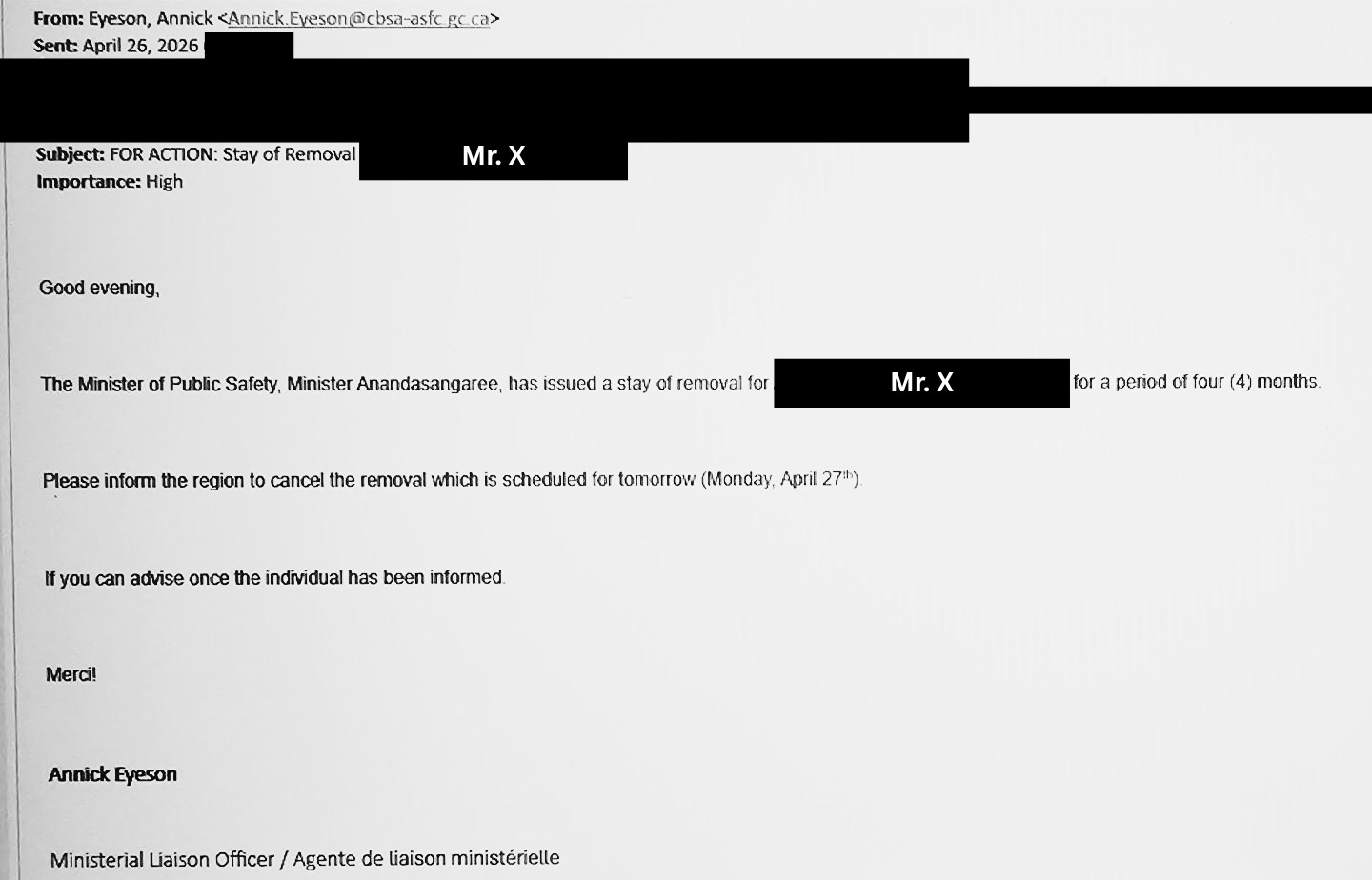
No reason for the decision was given, the whistleblower said, airline tickets were cancelled and months of work liaising with both the government of Poland – the country Mr. X and his escort officers were to transit through to get to the border – and Ukraine was suddenly irrelevant, all at a cost to Canadian taxpayers.
“We have someone in Canada who is under criminal removal orders and often it’s difficult dealing with foreign governments getting them to take back their citizens,” the whistleblower said. “[Ukraine] was absolutely willing to take him back, he had a valid passport, there was no issue with him going back, but our own government stepped in to stop his removal.”
The whistleblower told me that CBSA has deported dozens of people back to Ukraine on grounds of criminality or security concerns since 2022 without Public Safety stepping in.
In Mr. X’s case, The State of Things learned recently that after a request for deferral was filed by his wife on “humanitarian and compassionate grounds” – and rejected – the couple went to a Liberal MP in Winnipeg, which is how the file ended up in front of the minister.
Ayesha Kumararatne is the founder and principal lawyer at Kumararatne Law in Ottawa, a firm that handles immigration and deportation cases, including for individuals who have criminal charges. Kumararatne said a high-level intervention by a minister has only happened to her twice in 12 years.
“I think my first reaction was to think about the other individuals here in Canada who are fighting removal and have extensive applications pending in the system, with humanitarian and compassionate grounds clearly laid out,” she told The State of Things in an interview.
“It’s not clear to me from reviewing Mr. X’s situation whether or what kind of deferral request they submitted or whether or not they went to the federal court for a stay of removal…so within that context I was surprised the minister did get involved in what seems like the 11th hour.”
Kumararatne cautioned that while the facts of Mr. X’s case may seem shocking to the public, it’s important to note that the minister did not grant him a temporary residence permit or a permanent residence application on humanitarian and compassionate grounds, which Mr. X is entitled to apply for, even with a criminal conviction.
“It is just a temporary deferral of removal, not the granting of status,” she said. “Of course, the concern here is how can others get access to the minister’s discretion in the way Mr. X has.”
Kumararatne said the involvement of an MP is probably the “key thing” that facilitated Mr. X getting a reprieve – but not everyone “has access to their MP the way Mr. X did.”
While the full report on Mr. X was digitized and provided to Public Safety, the whistleblower alleged Mr. X’s stay was documented as being “on the recommendation” of his ministerial liaison officer, the author of the email sent hours before the deportation flight.

WHO GETS TO STAY, WHO HAS TO GO?
Mostafa Henaway is a community organizer at the Immigrant Worker Centre in Montreal, where he sees first-hand the family separations of immigrants, refugees and asylum seekers due to Canada’s immigration system.
He told The State of Things in an interview that what stood out to him about Mr. X’s case was that the Minister’s actions are not being applied equally across the system.
“That the stay [of removal] is coming directly from the Minister, shows that they’re willing to do things last minute, that they’re willing to intervene,” he said. “It really shows that unfortunately some people are being favoured and that’s not being applied across the board.”
Henaway pointed out that families are being separated and people with Canadian-born children are being deported, even after public awareness campaigns, press conferences and public pressure being met with silence by the Minister.
“So why did Mr. X have an intervention…why him and not others?” he said, adding it was an “enraging” example of how Canada doesn’t “have a rule-based system.”
“It’s actually very political, who gets access to the Minister…lots of families are suffering, and we’re constantly shut out of having that access,” he said. “It’s extraordinary, it’s kind of angering, especially in a moment where there’s so many high-end, reckless deportations and that this is actually happening at the same time.”
RECORDS? WHAT RECORDS?
The State of Things filed four separate Access to Information and Privacy requests with the CBSA, Public Safety and the Immigration and Refugee Board of Canada (IRBC) in an attempt to understand how many times Minister Anandasangaree has intervened in a stay or removal since he took on the role.
The first attempt, sent to CBSA, which mentioned the stay was granted “on the recommendation of the CBSA liaison officer” was bounced back with a signed letter that stated the liaison officer “does not provide recommendations to the Minister or his office regarding ‘intervening in/staying deportation and removal orders,’ nor does any other employee of the CBSA.”
When The State of Things followed up with the case officer to point out a source with direct knowledge had said otherwise, no response was given.
Second and third attempts to both Public Safety and the IRBC were also rebuffed.
In their response, the IRBC said the request fell under the jurisdiction of the CBSA and transferred the file accordingly.
Public Safety replied to both requests that “no information related to your request exists.”
While the minister’s office is off limits for ATIPs, the wording used in the requests also covered if Anandasangaree or his staff sent instructions to Public Safety regarding intervening in, or staying, deportation and removal orders being carried out by the CBSA.
A case officer replied, “They do not have any records relevant to your request.”
A final ATIP request is currently sitting with the CBSA, who have requested a 150-day extension. It has been 75 days since the request was put in.
MINISTERIAL SILENCE
The State of Things also reached out to Minister Anandasangaree’s office directly about Mr. X’s case, why he granted the stay of removal and how many times Anandasangaree had intervened in a removal since he took on the role.
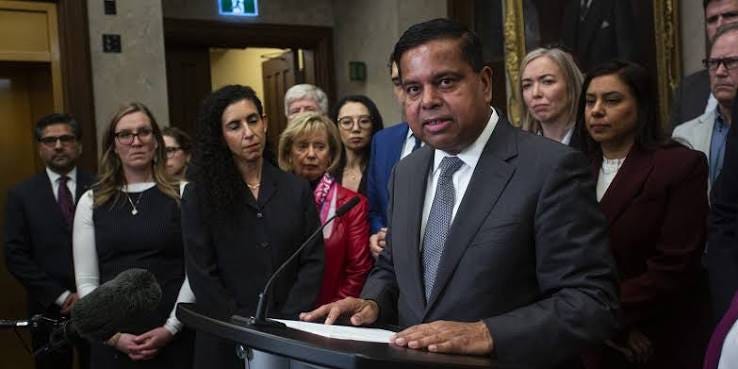
Spokesperson for the minister Simon LaFortune replied that “due to privacy considerations, we will not be commenting on any specific removal case.”
The public service whistleblower doesn’t agree with the minister’s decision to issue a reprieve to Mr. X.
“We’re doing everything as required by the law and then this minister is basically using his ministerial powers of relief to circumvent the law as designed.”
With the Liberals campaigning on a tougher stance regarding removals and deportations, especially for those with criminal convictions, Mr. X’s case presents somewhat of a speed bump to what the government says they’re doing, versus what’s actually happening.
There is no reasonable objection to providing the number of times Minister Anandasangaree has intervened in a stay of removal.
While concerns over privacy are laudable, in this case Mr. X’s rights could be interpreted as being used as a shield so the minister doesn’t have to answer for his decisions – decisions he has publicly commented on.
Testifying in April at the House of Commons Standing Committee on Public Safety and National Security, Anandasangaree stated he has “been tracking the stays [he’s] issued” adding “they are used sparingly in the interest of ensuring fairness and equity.”
Those comments in the House of Commons came three days after Mr. X’s deportation reprieve.
–That’sTheStateofThings–
Deportation a death sentence for Ukrainians…